After losing a lot of weight, you might think "my belly fat must be gone now," but sometimes the lower belly still sags or the skin folds even after the weight is down. Especially after pregnancy and childbirth or major weight loss, the fat may decrease while skin and tissue that have already lost elasticity remain. In this case, exercising more or losing more weight is unlikely to get rid of the sagging skin. Abdominoplasty performs liposuction on the loose belly and then removes the stretched tissue that remains after the fat is removed, making the abdomen smooth and firm. So if your belly still sags after losing enough weight, it is worth understanding why abdominoplasty may be needed and how it is done.
Contents
- Why does the belly sag even after losing weight?
- Can a sagging belly be fixed with exercise?
- What is abdominoplasty?
- How does abdominoplasty tidy a sagging belly?
- When is abdominoplasty needed?
- How is liposuction alone different from abdominoplasty?
- How does the abdominal line change after abdominoplasty?
- Abdominoplasty: common myths and facts
Why does the belly sag even after losing weight?
Losing weight reduces body fat, but skin that has already stretched does not necessarily return to how it was. The abdomen is a typical area where skin stretches greatly with pregnancy or rapid weight gain. When weight then falls and fat decreases, the volume of the abdomen gets smaller, but if skin elasticity does not recover enough, stretched skin remains and can fold or sag downward. It is also important that, when skin sags after rapid weight loss, liposuction alone is unlikely to improve it.
In particular, if you notice the following, it should be distinguished from a belly that simply protrudes because fat remains.
■ Your weight is within the normal range but the lower belly skin hangs loosely
■ The abdominal skin folds into several layers when you sit
■ There is not much belly fat, but the skin sags downward
■ The stretched lower belly skin remains despite exercise
In these cases, a method that tidies the remaining skin and tissue may be needed rather than further weight loss.
In a meta-analysis of 25 studies on body contouring after major weight loss, overall complications were 31.5% and seroma was the most common. If preoperative BMI was 30 or above, the risk of complications was 37% higher, so surgery is recommended after weight has stabilized sufficiently.[1]
Can a sagging belly be fixed with exercise?
Exercise helps strengthen the abdominal muscles and reduce body fat, but it cannot remove skin that has already stretched. Working hard on ab exercises can improve abdominal muscle strength and body shape, but if skin has physically stretched and remains, exercise alone will not get rid of it. Especially if your belly still sags after losing considerable weight, it is easy to think "do I need to lose more?", but if skin sagging rather than fat is the main problem, continuing to lose weight alone is unlikely to give you the abdominal shape you want. If belly fat and stretched skin that do not improve with exercise or diet are your concern, abdominoplasty can be considered.
Related readingSolutions for a loose belly that dieting won't fix are covered in "Loose, sagging belly: what options are there when dieting doesn't work?" (Korean).
What is abdominoplasty?
Abdominoplasty is surgery that tidies a loose belly that has lost elasticity by dealing with fat and stretched tissue separately. If fat remains in the abdomen, liposuction is performed first to remove unwanted abdominal fat. Then the stretched tissue that remains after liposuction is removed. After removing unwanted fat and stretched tissue together, the remaining skin is pulled and sutured to make the abdominal surface smooth — this is the core of abdominoplasty.
In short: ① remove abdominal fat with liposuction ② remove the stretched tissue left after liposuction ③ tidy and suture the remaining skin ④ complete a smooth abdominal contour
It is easiest to understand as this sequence. If needed, a stretched or separated abdominal wall or abdominal muscles can also be corrected at the same time.
How does abdominoplasty tidy a sagging belly?
The advantage of abdominoplasty is that it tidies fat and skin sagging at the same time, not just reducing the amount of fat. Reducing abdominal thickness with liposuction makes the abdomen slimmer overall. But if the skin is stretched, skin remains after fat is removed. Removing this remaining stretched tissue reduces the unwanted skin left on the abdomen. Then pulling the skin downward and suturing it tidies the sagging abdominal surface. Because of this process, abdominoplasty can be seen as surgery that changes body appearance more actively than liposuction alone. Especially when lower belly skin still folds after weight loss or the area below the navel sags severely, combining liposuction and tissue removal helps tidy the overall abdominal silhouette.
When is abdominoplasty needed?
Abdominoplasty is not chosen simply because there is a lot of belly fat. It is typically considered when stretched skin remains after weight loss, when abdominal skin has stretched after childbirth, or when abdominal fat and skin sagging occur together. Especially if, after weight loss, remaining skin makes the lower belly hang over your trousers, or the skin folds into several layers when you sit, liposuction alone may not be enough. Abdominoplasty also has the advantage of tidying the overall abdominal contour, not just the belly seen from the front, by adjusting the incision length and amount of skin removed. So if you wonder "I've lost all the weight, so why does my belly still sag?", the accurate way to decide on a surgical method is based on whether remaining fat or skin is making the abdomen sag.
How is liposuction alone different from abdominoplasty?
The biggest difference between the two surgeries is whether stretched skin and tissue can be removed directly. Liposuction removes subcutaneous fat accumulated in the abdomen to refine the body contour. If skin elasticity is sufficient, the skin can settle to the new abdominal contour after fat is reduced. But if the skin has already stretched a lot, liposuction alone cannot remove it. Abdominoplasty differs in that it can directly remove the stretched tissue left after liposuction and tidy the skin. Using liposuction and abdominoplasty together can aim to reduce fat and improve skin sagging at the same time. So "a belly with a lot of fat" and "a belly whose fat has decreased but whose skin sags" are not approached the same way.
How does the abdominal line change after abdominoplasty?
The biggest change with abdominoplasty is tidying stretched abdominal skin and tissue to create a smoother appearance. Reducing remaining abdominal fat with liposuction and then removing stretched tissue tidies both abdominal volume and skin sagging. When abdominal wall correction is needed during abdominoplasty, the structure that supports the abdomen can also be corrected. If the abdominal wall muscles have separated, they can be sutured to tighten the abdominal wall.
However, abdominoplasty is not a weight-loss or obesity surgery. Keeping your weight stable before surgery and avoiding rapid weight changes afterward are important for maintaining the abdominal shape. Liposuction, too, is surgery for refining body shape rather than losing weight.
Abdominoplasty: common myths and facts
| What many people think… | What the evidence shows |
|---|---|
| "Losing more weight will tuck in a sagging belly." | Stretched skin does not shrink with more weight loss and can even look more folded. |
| "Sit-ups fix a sagging belly." | The muscles may get stronger, but skin sagging remains. |
| "Right after weight loss is the best time for surgery." | Results last longer when surgery is done after weight has stabilized. |
For patients who want abdominoplasty after major weight loss, I first check whether their weight has been stable for at least several months. If surgery is done while weight is still fluctuating, the result fluctuates too.
If your lower belly still sags after losing weight, the cause may be not only remaining fat but also skin and tissue that have lost elasticity. Abdominoplasty performs liposuction on such an abdomen to remove fat, removes the stretched tissue that remains after liposuction, and then tidies the skin to create a smoother, firmer abdominal shape. So for a sagging belly that won't improve just by losing more weight, abdominoplasty, which can tidy both fat and skin sagging, can be an effective body-contouring option.
🔬 Supporting research
Peer-reviewed international journal articles that support this article. Click a title to open the PubMed abstract.
- Aesthetic plastic surgery 2021 — body contouring after bariatric surgery, 25-study meta-analysis Complications of Body Contouring Surgery in Postbariatric Patients: A Systematic Review and Meta-Analysis. Key finding: complications 31.5%; risk 37% higher with BMI 30 or above In text [1] · PMID 34018015 · DOI
🎬 Watch — Dr. Park Seong-Soo · BongBong Plastic Surgery
Related videos from BongBong Plastic Surgery's official channel and Dr. Park Seong-Soo's channel. Videos are in Korean and play on YouTube.
-
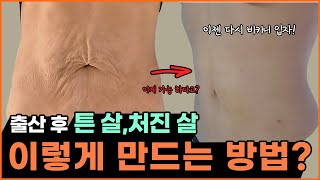 7:56 From removing postpartum stretch marks to firming a sagging belly when exercise isn't enough (Korean) Dr. Park's channel · 2025.02.19
-
 0:35 When exercise won't fix a sagging belly (Korean) Dr. Park's channel · 2025.02.20
-
 8:29 Dieting: what if you want to lose weight only in certain areas? (Korean) Dr. Park's channel · 2025.04.09
Frequently asked questions (FAQ)
I've lost all the weight but my lower belly still sags — do I need abdominoplasty?
A. If your skin hangs or folds even after losing weight, stretched skin and tissue rather than fat may be the main problem. In this case, abdominoplasty can remove the remaining tissue.
Which is better for a sagging belly, abdominoplasty or liposuction?
A. If fat is the main problem, liposuction is central; if the skin has stretched along with fat, abdominoplasty can also tidy the stretched skin and tissue.
Will abdominoplasty make me lose a lot of weight?
A. Abdominoplasty is body-contouring surgery, not weight-loss surgery. It can reduce fat with liposuction and remove stretched tissue, but its purpose is not to greatly reduce body weight.
Can a sagging belly after childbirth be corrected with abdominoplasty?
A. Yes. Abdominal skin and tissue stretched by pregnancy and childbirth can be removed, and if needed, separation of the abdominal wall or abdominal muscles can be corrected at the same time.
📖 References
Click a [number] in the text to jump to its source, and ↩ to return. Only papers whose title, journal and year were verified on PubMed are listed.
- ↩ Marouf A, Mortada H. Complications of Body Contouring Surgery in Postbariatric Patients: A Systematic Review and Meta-Analysis. Aesthetic Plast Surg. 2021;45(6):2810-2820.PMID 34018015 · DOI— body contouring after bariatric surgery, 25-study meta-analysis — complications 31.5%; risk 37% higher with BMI 30 or above
BongBong Plastic Surgery · Dr. Park Seong-Soo, Medical Director
Contact us for a consultation