Many people have lost weight through exercise and diet yet still have a drooping lower belly with loose skin left over. Especially after pregnancy and childbirth or major weight loss, not only abdominal fat but also the elasticity of skin and tissue can decline. In this case, removing fat alone is unlikely to tidy a sagging belly neatly. Abdominoplasty performs liposuction on a loose belly that has lost elasticity and removes the stretched tissue that remains after liposuction, making the abdomen smooth and firm. In other words, the key is correcting the overall shape of the abdomen by reducing fat and removing sagging tissue together.
Contents
- What is abdominoplasty?
- Why doesn't a sagging belly go away with liposuction alone?
- In what order is abdominoplasty performed?
- Abdominoplasty method ①: What is a mini abdominoplasty?
- Abdominoplasty method ②: What is a full abdominoplasty?
- Abdominoplasty method ③: What is a 360-degree abdominoplasty?
- Abdominoplasty method ④: What is an extended abdominoplasty?
- How is abdominoplasty different from liposuction?
- What should I be careful about after abdominoplasty?
- Abdominoplasty: common myths and facts
What is abdominoplasty?
Abdominoplasty is surgery that improves the appearance of the abdomen by tidying fat and tissue in a belly that has lost elasticity and stretched. When a lot of fat has built up in the abdomen and the skin has also stretched, removing fat alone is unlikely to create the shape you want. Liposuction reduces the thickness of subcutaneous fat, but it does not remove skin and tissue that have already lost elasticity and stretched. In that case, abdominoplasty can first tidy abdominal fat with liposuction, then remove the stretched tissue that remains after liposuction and tidy the skin to smooth the abdominal surface. So the core of abdominoplasty is not simply "removing belly fat" but tidying fat and stretched tissue together to make a sagging abdomen smoother.
Related readingWho abdominoplasty is for and the changes you can expect are covered in "What is abdominoplasty? Candidates and effects" (Korean).
Why doesn't a sagging belly go away with liposuction alone?
Liposuction directly removes subcutaneous fat. It is used to reduce fat in specific areas that do not slim down easily with exercise or diet and to refine body contours. But removing fat does not remove skin that has already stretched. For example, if belly fat has decreased after major weight loss but the lower belly skin hangs loosely, the skin sagging can remain after liposuction alone. Reducing fat when skin elasticity is insufficient can even make the leftover skin more noticeable. That is why, for an abdomen with a lot of fat and stretched skin, liposuction and skin/tissue excision are considered together. Conversely, if only fat protrudes without skin sagging, liposuction alone can tidy the abdominal line. In the end, it is important to first identify whether the sagging belly is caused by fat, by stretched skin, or by both.
In what order is abdominoplasty performed?
Abdominoplasty starts by assessing the current amount of abdominal fat, skin elasticity and the extent of sagging, and then designing the surgical range. Next, subcutaneous fat is tidied with abdominal liposuction, and then the stretched skin and tissue that remain after fat removal are excised. After removing the necessary tissue, the remaining skin is pulled and sutured to tidy the abdominal surface. If the abdominal wall is weak or the abdominal muscles have separated, abdominal wall correction may be performed as well. Put simply, it can be understood as: liposuction → removal of stretched tissue → skin tidying and suturing → abdominal wall correction if needed. Because someone whose whole abdomen sags significantly and someone whose lower belly alone sags need different surgical ranges, abdominoplasty is not performed in just one way.
Abdominoplasty method ①: What is a mini abdominoplasty?
Mini abdominoplasty is an abdominoplasty method that tidies sagging skin and tissue mainly in the lower abdomen. It can be considered when sagging is concentrated below the navel and the upper abdominal skin has relatively good elasticity. For example, when sagging is limited in location — such as a lot of skin left only on the lower belly after weight loss, or a drooping lower abdomen after childbirth — a mini abdominoplasty can reduce the correction range. Because a mini abdominoplasty does not excise skin across the whole abdomen, it is not suitable when skin sagging extends severely into the upper abdomen. In short, if mainly the lower belly sags, consider a mini abdominoplasty; if the whole abdomen has stretched, a wider-range abdominoplasty is needed.
Abdominoplasty method ②: What is a full abdominoplasty?
Full abdominoplasty tidies sagging skin and tissue across the whole abdomen, from above the navel to the lower abdomen. It is used to correct sagging over a wide area, such as when the whole abdominal skin has stretched after pregnancy and childbirth, or when a lot of skin remains across the belly after rapid weight loss. The key is tidying abdominal fat with liposuction, then removing the remaining stretched skin and pulling the skin downward to suture it and refine the abdominal contour. Abdominal wall correction can be done at the same time if needed. So if skin sagging across the whole abdomen is pronounced, full abdominoplasty is a typical choice.
Abdominoplasty method ③: What is a 360-degree abdominoplasty?
A 360-degree abdominoplasty corrects the whole torso over a wide range, including the flanks and waist, rather than only the front of the abdomen. If skin has stretched not only on the abdomen but also around the flanks and waist, tidying only the front can leave the side sagging in place. In this case, fat and sagging tissue are tidied together while looking around the whole torso, correcting so the front, side and back lines connect. It can be used especially when the sagging range is wide, such as when skin has stretched not only on the abdomen but also on the flanks and waist after major weight loss.
Abdominoplasty method ④: What is an extended abdominoplasty?
Extended abdominoplasty widens the correction range toward the flanks compared with a standard abdominoplasty. If only the skin on the front of the abdomen is removed, sagging left on the flanks can stand out, so the skin continuing from the abdomen to the flanks is tidied as well. In other words, when skin has stretched beyond the central abdomen to the sides, an extended abdominoplasty can widen the correction range to tidy the overall torso line.
The four methods can be summarized as follows.
| Type | Main correction area | Features |
|---|---|---|
| Mini abdominoplasty | Mainly the lower abdomen | Focused correction of lower belly sagging |
| Full abdominoplasty | The whole abdomen | Corrects widespread skin sagging in the upper and lower abdomen |
| Extended abdominoplasty | Abdomen + flanks | Corrects sagging that continues to the sides |
| 360-degree abdominoplasty | Abdomen + flanks + waist | Corrects widespread sagging of the whole torso |
In a study of patients whose rectus abdominis muscles had separated after childbirth and who had abdominal wall repair, at a median follow-up of 36 months, 90% reported that their main discomfort was fully or partly reduced.[1]
How is abdominoplasty different from liposuction?
The biggest difference is between reducing fat and removing stretched tissue. Liposuction removes subcutaneous fat to reduce abdominal thickness and protrusion and refine the body shape. But it is not surgery that directly excises skin. The core of abdominoplasty is removing skin that has lost elasticity and stretched tissue that remains even after liposuction, to tidy the abdomen. So if the belly is thick with a lot of fat and the skin also hangs loosely, liposuction alone may not be enough. Conversely, if skin elasticity is maintained and fat is the main problem, abdominoplasty is not needed and liposuction alone can correct it. In the end, "a lot of belly fat" and "a sagging belly" are different problems, so the two must be distinguished.
What should I be careful about after abdominoplasty?
Because abdominoplasty can involve both liposuction and skin/tissue excision, sufficient recovery time is needed after surgery. Early on, swelling, bruising, tightness and sensory changes can appear, and caring for the incision wound is important. Because abdominoplasty excises and sutures skin, it leaves a scar, and the incision is generally designed to sit near the panty line on the lower abdomen. After surgery, strenuous exercise and activities that strain the abdomen should be avoided until your medical team allows them. Also, large weight changes over the long term can affect the abdominal shape after surgery, so it is good to keep your weight stable afterward too. A recovery period of about 3 weeks may be needed before returning to daily life after abdominoplasty, and recovery can vary with the extent of surgery.
In a meta-analysis of 143 abdominoplasty studies (27,834 patients) worldwide, postoperative seroma (fluid collecting at the surgical site) occurred in about 10.9%. This is why managing drains and compression garments is important.[2]
Abdominoplasty: common myths and facts
| What many people think… | What the evidence shows |
|---|---|
| "Abdominoplasty is a single method." | Depending on where the sagging is, the range varies: mini, full, 360-degree or extended. |
| "The wider the excision, the better the result." | Excising more than needed increases the burden of scarring and complications. The principle is excision matched to the extent of sagging. |
| "Separated abdominal muscles can be closed with exercise." | If postpartum rectus diastasis is large, abdominal wall repair may be needed. |
When choosing an abdominoplasty method, I look at sagging above and below the navel separately. If only below the navel sags, a mini is enough; if it extends above, the range must be widened for an even result.
A sagging belly may not simply come from having a lot of fat but from fat and reduced skin elasticity together. Abdominoplasty performs liposuction on a loose belly that has lost elasticity and removes the stretched tissue that remains afterward, making the abdomen smooth and firm. If only the lower abdomen sags, consider a mini abdominoplasty; if the whole abdomen has stretched, a full abdominoplasty; if sagging extends to the flanks, an extended abdominoplasty; and if the whole torso including the abdomen, flanks and waist sags significantly, a 360-degree abdominoplasty. In the end, what matters is not just how much fat to remove but choosing the most appropriate abdominoplasty method after checking both the amount of fat and the extent of skin sagging.
🔬 Supporting research
Peer-reviewed international journal articles that support this article. Click a title to open the PubMed abstract.
- Hernia : the journal of hernias and abdominal wall surgery 2023 — abdominal wall repair for postpartum rectus diastasis Simple plication alleviates physical symptoms in patients with post-gestational rectus diastasis. Key finding: symptoms relieved or partly relieved in 90% In text [1] · PMID 37354279 · DOI
- Aesthetic plastic surgery 2021 — abdominoplasty, 143 studies · 27,834 patients The Global Prevalence of Seroma After Abdominoplasty: A Systematic Review and Meta-Analysis. Key finding: seroma rate 10.9% In text [2] · PMID 34080041 · DOI
🎬 Watch — Dr. Park Seong-Soo · BongBong Plastic Surgery
Related videos from BongBong Plastic Surgery's official channel and Dr. Park Seong-Soo's channel. Videos are in Korean and play on YouTube.
-
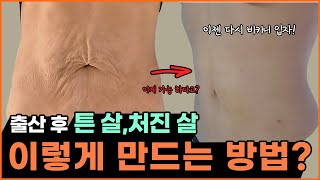 7:56 From removing postpartum stretch marks to firming a sagging belly when exercise isn't enough (Korean) Dr. Park's channel · 2025.02.19
-
 0:35 When exercise won't fix a sagging belly (Korean) Dr. Park's channel · 2025.02.20
-
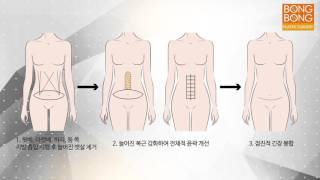 2:07 Abdominoplasty at BongBong Plastic Surgery (Korean) BongBong official · 2015.11.27
Frequently asked questions (FAQ)
Is abdominoplasty the same surgery as liposuction?
A. No. Liposuction removes subcutaneous fat, while abdominoplasty removes the stretched skin and tissue left after liposuction to correct the shape of the abdomen.
Why does my lower belly still sag even though I exercise a lot?
A. Exercise helps strengthen abdominal muscles and reduce body fat, but it cannot remove skin and tissue that have already stretched. If skin sagging is the main problem, abdominoplasty can directly remove the stretched tissue.
Will abdominoplasty get rid of belly fat completely?
A. Abdominoplasty is not surgery that greatly reduces weight; it improves the abdominal contour by tidying fat and stretched skin and tissue. If weight loss itself is needed, separate weight management is also required.
How is a mini abdominoplasty different from a full abdominoplasty?
A. A mini abdominoplasty mainly corrects lower abdominal sagging, while a full abdominoplasty corrects sagging skin across the whole abdomen, including the upper abdomen.
How is an extended abdominoplasty different from a 360-degree abdominoplasty?
A. An extended abdominoplasty widens the correction range from the abdomen to the flanks, while a 360-degree abdominoplasty corrects the whole torso over a wide range, including the flanks and waist.
Can I exercise after abdominoplasty?
A. Yes. However, early on, avoid exercise that strongly engages the abdomen until the surgical area recovers, and restart exercise gradually from the point your medical team allows.
📖 References
Click a [number] in the text to jump to its source, and ↩ to return. Only papers whose title, journal and year were verified on PubMed are listed.
- ↩ Nervil GG, Paulsen JF, Kalstrup J, et al. Simple plication alleviates physical symptoms in patients with post-gestational rectus diastasis. Hernia. 2023;27(4):957-968.PMID 37354279 · DOI— abdominal wall repair for postpartum rectus diastasis — symptoms relieved or partly relieved in 90%
- ↩ Salari N, Fatahi B, Bartina Y, et al. The Global Prevalence of Seroma After Abdominoplasty: A Systematic Review and Meta-Analysis. Aesthetic Plast Surg. 2021;45(6):2821-2836.PMID 34080041 · DOI— abdominoplasty, 143 studies · 27,834 patients — seroma rate 10.9%
BongBong Plastic Surgery · Dr. Park Seong-Soo, Medical Director
Contact us for a consultation