Swelling of the hands and feet mostly starts when the return flow through veins and lymphatics slows and fluid stays in the extremities. If it rises and falls with the time of day and both sides are similar, it is closer to lifestyle factors; if only one side swells or it lasts all day, tests come first. Negative-pressure circulation care such as Vacumed is an option to combine after the cause has been checked.
Contents
Why do hands and feet swell?
Fluid leaves the heart, circulates through the body and returns through the veins and lymphatics. When this return slows, areas far from the heart, such as the fingers and the tops of the feet, feel heavy first. Sitting or standing for long periods stops the calf muscles from acting as a pump, so flow stagnates further, and salty food, lack of sleep and less exercise add to the swelling.
Lying down all night lets fluid spread evenly, so the face and hands swell in the morning; standing or sitting all day lets gravity cause the feet and ankles to swell in the evening.
How can lifestyle swelling be told apart from signs of illness?
| What to check | Closer to lifestyle factors | Needs medical attention |
|---|---|---|
| Pattern of change | Worse only in the morning or evening, then subsides | Persists all day or gets steadily worse |
| Left and right | Both sides swell similarly | Only one arm or leg swells |
| Accompanying symptoms | Stiffness, a heavy feeling | Rapid weight gain, change in urine output, shortness of breath, pain, warmth |
| Recovery | Relieved by raising the legs or moving | Unchanged even after rest |
The causes of leg swelling range widely, from swelling simply from standing too long to chronic venous disease, lymphedema, and heart or kidney disease. So treatment also differs by cause, and in most cases the basics are compression, elevation, exercise and weight management.[1]
What lifestyle changes reduce swelling?
The first thing you can change is how you sit. In a study comparing sitting, standing and alternating between sitting and standing, calf swelling was greatest with continuous sitting, and even brief standing reduced swelling.[2]
- Get up once an hour to use your calves, and cross your legs less often
- Before bed, raise your legs slightly above your heart
- Cut back on salty soups and processed foods — keep drinking water as usual
- If your job involves standing for long periods, consider compression stockings (after consultation if you have venous disease)
How does Vacumed negative-pressure circulation care work?
Vacumed is a device that places the lower body in a sealed chamber and alternates negative and positive pressure to stimulate blood flow in the lower body. It is done lying down, without incisions or injections.
However, this kind of care does not reveal the cause of the swelling. If there is a kidney, thyroid or heart cause, the right order is to check that first and then combine circulation care.
The effects of applying intermittent negative pressure to the legs have mainly been confirmed in blood-flow measurement studies. In a study applying it to patients with spinal cord injury, peak blood-flow velocity in the foot artery rose 33% above baseline when negative pressure was applied. However, large-scale clinical evidence on whether it reduces swelling itself is still limited.[3]
Related readingWhen energy therapy that supports circulation and recovery is used is covered in "When muscles keep knotting up and aching, can energy therapy help?" (Korean).
Common myths and facts — swelling of the hands and feet
| What many people think… | What the evidence shows |
|---|---|
| "Drinking less water reduces swelling." | Cutting fluids can make the body hold on to more fluid. What to cut is sodium, not water. |
| "All swelling is a circulation problem, so massage is enough." | If only one side swells or it lasts all day, venous, lymphatic or organ disease should be checked first. |
| "Circulation devices treat the cause." | Devices are supportive care that aid flow. Identifying the cause comes first. |
| "Tingling hands and feet have the same cause as swelling." | Besides circulation, nerve compression in the neck or wrist, or metabolic disease may be the cause. |
See a doctor first if you notice these signs
- When only one arm or leg swells suddenly
- When swelling comes with shortness of breath or rapid weight gain
- When urine output drops noticeably
- When pressing leaves a lasting dent and the swelling hasn't gone down for days
- When swelling comes with pain, warmth or redness
In many cases, basic checks such as blood and urine tests are enough to set the direction.
For patients who come for circulation care because of swelling, the first thing I ask is "Do both sides swell the same, or only one?" This one question almost decides whether we go to care or to tests. Circulation care after the cause has been sorted out is the safest and gives the highest satisfaction.
Swelling of the hands and feet divides into reversible factors such as posture, activity and sodium and signs of internal illness. If only one side swells or it lasts all day, tests come first; once the cause is sorted out, negative-pressure circulation care can be used alongside lifestyle improvements.
🔬 Supporting research
Peer-reviewed international journal articles that support this article. Click a title to open the PubMed abstract.
- Biology 2022 — crossover comparison study Breaking of Sitting Time Prevents Lower Leg Swelling-Comparison among Sit, Stand and Intermittent (Sit-to-Stand Transitions) Conditions. Key finding: swelling greatest with continuous sitting — even brief standing reduces it In text [2] · PMID 35741420 · DOI
- Spinal cord 2018 — clinical measurement study Intermittent negative pressure applied to the lower limb increases foot macrocirculatory and microcirculatory blood flow pulsatility in people with spinal cord injury. Key finding: intermittent negative pressure raised peak foot-artery blood-flow velocity by 33% In text [3] · PMID 29284796 · DOI
🎬 Watch — Dr. Park Seong-Soo · BongBong Plastic Surgery
Related videos from BongBong Plastic Surgery's official channel and Dr. Park Seong-Soo's channel. Videos are in Korean and play on YouTube.
-
 3:25 Anti-aging while lying down comfortably: circulation therapy "Vacumed" (Korean) Dr. Park's channel · 2024.10.15
-
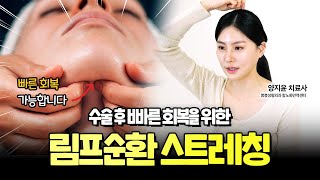 22:45 Try it yourself! Exercises for faster recovery after surgery | lymphatic circulation stretching (Korean) Dr. Park's channel · 2024.06.19
-
 0:54 Faster ways to reduce swelling than pumpkin juice (Korean) Dr. Park's channel · 2024.05.14
Frequently asked questions (FAQ)
Is it a problem if my hands swell only in the morning?
Hand swelling in the morning after lying down all night is common and usually subsides with activity. If it lasts all morning or comes with finger joint pain, it should be checked.
Does drinking less water reduce swelling?
No. Cutting fluids can actually make the body hold on to more fluid. What to adjust is sodium intake.
What does it mean when tingling and swelling of the hands and feet occur together?
They can occur together when circulation slows, but nerve compression or metabolic disease may also be behind them, so if they recur, it is best to have them checked.
How is Vacumed care done?
The lower body is placed in a chamber and pressure changes are applied while lying down; no incisions or injections are involved.
Are tests really needed before circulation care?
If only one side swells, swelling doesn't go down all day, or there is shortness of breath, weight gain or a change in urine output, tests come before care.
📖 References
Click a [number] in the text to jump to its source, and ↩ to return. Only papers whose title, journal and year were verified on PubMed are listed.
- ↩ Ratchford EV, Evans NS. Approach to Lower Extremity Edema. Curr Treat Options Cardiovasc Med. 2017;19(3):16.PMID 28290004 · DOI— review of approaches to leg swelling — wide range of causes, treatment by cause; basics are compression, elevation, exercise and weight management
- ↩ Francisco R, Nunes CL, Breda J, et al. Breaking of Sitting Time Prevents Lower Leg Swelling-Comparison among Sit, Stand and Intermittent (Sit-to-Stand Transitions) Conditions. Biology (Basel). 2022;11(6).PMID 35741420 · DOI— sitting vs standing vs alternating — calf swelling greatest with continuous sitting, reduced by brief standing
- ↩ Sundby ØH, Høiseth LØ, Irgens I, et al. Intermittent negative pressure applied to the lower limb increases foot macrocirculatory and microcirculatory blood flow pulsatility in people with spinal cord injury. Spinal Cord. 2018;56(4):382-391.PMID 29284796 · DOI— intermittent negative pressure applied to the legs — increased foot-artery blood-flow variation, peak velocity up 33%
BongBong Plastic Surgery · Dr. Park Seong-Soo, Medical Director
Contact us for a consultation