Because your belly looks flatter when you tense your abs, many people wonder, "If I keep tensing like this, will my belly fat go away?" In short, tensing your abs alone does not reduce belly fat. When you tense your abdomen, the abdominal muscles contract and your belly can look temporarily flatter, but the subcutaneous fat stored in the abdomen and skin that has already stretched are not removed by this. Reducing body fat requires adjusting your overall energy expenditure and intake. The problem is when, despite losing weight and exercising consistently, the belly alone stays rounded or loose skin remains. Especially after pregnancy and childbirth or rapid weight changes, changes to the skin and abdominal wall can occur along with fat.
Contents
- Does tensing your abs reduce belly fat?
- Why your belly looks flatter when you tense it
- Why does belly fat remain even with exercise?
- How are belly fat and loose skin different?
- When is liposuction alone not enough?
- What is abdominoplasty?
- When abdominoplasty can make a big difference
- Consult a plastic surgeon if your abdomen looks like this
- Abdominoplasty: common myths and facts
Does tensing your abs reduce belly fat?
No. Tensing your abs alone does not reduce belly fat. When you tense your abdomen, the muscles around it — the rectus abdominis and transversus abdominis — contract. As the abdomen is pulled inward, your belly can look slimmer and firmer than it really is.
But this change is not fat being removed; it is the abdominal shape changing temporarily because the muscles are contracted. So while you are tensing, your belly looks flatter, but when you relax it returns to its original shape.
Reducing abdominal fat and using your abdominal muscles are two different things. Strengthening your abs through exercise helps posture and core stability, but tensing a specific area does not selectively burn the fat in that area.
Why your belly looks flatter when you tense it
When you tense your abs and look in the mirror, your belly can sometimes pull in quite a lot. This is because the contracting abdominal muscles support the abdominal wall and change the shape of the abdomen. Especially if you usually slouch or rarely use your abs, simply straightening your posture and engaging your abdomen properly can make your belly look flatter.
But there is an important difference here: "your belly looking flatter" and "losing belly fat" are not the same. If your belly pulls in a lot when you tense it, posture and abdominal muscles may play a part; but if the skin still folds or the lower belly hangs even when you tense, it may not simply be a muscle issue. Especially for an abdomen after childbirth or significant weight loss, you should check whether reduced skin elasticity is present along with fat.
Why does belly fat remain even with exercise?
The reason people wonder "I exercise and watch my diet, so why is my belly the same?" is that fat is not the only reason a belly protrudes. Subcutaneous fat, loose skin, changes in the abdominal wall and overall body fat can all make the abdomen look rounded. Especially after major weight loss, even though overall weight has dropped, abdominal skin can remain and look folded or loose. In this case, losing more weight does not make the skin itself disappear.
So before concluding "I just can't lose weight," it is important to distinguish whether the main problem with your abdomen right now is fat, skin sagging or a change in the abdominal wall.
In a randomized study examining the local effect of abdominal exercise, 16 overweight men who added abdominal exercise to running for 10 weeks lost about 3% more trunk fat than those who only ran. There was a difference, but it was small, and it did not reduce skin that had already stretched.[1]
How are belly fat and loose skin different?
When there is a lot of abdominal fat, a thick fat layer sits under the skin and the belly looks thick overall. When the skin has stretched, by contrast, the lower belly skin can fold or hang loosely even though weight has dropped, and the skin can fold into several layers when you sit.
These two are improved in different ways. If subcutaneous fat is the main problem, liposuction can tidy the abdominal contour. But if the skin itself has stretched a lot, removing only fat can make even more skin appear left over. That is why abdominoplasty looks not only at fat but also at the amount and elasticity of skin and the condition of the abdominal wall.
Related readingWhat options exist for a loose belly that exercise won't fix is covered in "Loose belly fat: what are the options when exercise doesn't work?" (Korean).
When is liposuction alone not enough?
Liposuction, as the name suggests, is surgery that removes fat under the skin to reduce abdominal volume and contour. If skin elasticity is sufficient, the skin contracts to some extent after the fat is reduced, creating a relatively smooth abdominal line. But if the skin has already stretched a lot, removing fat alone is unlikely to improve the excess skin.
For example, after childbirth or rapid weight loss,
if the lower belly skin hangs loosely,
the skin folds,
skin elasticity has dropped greatly along with stretch marks,
and loose skin remains despite exercise and weight loss,
it may be hard to achieve the result you want with liposuction alone.
This is when abdominoplasty can be considered. Abdominoplasty is surgery that tidies loose skin and subcutaneous fat and, if needed, also corrects the abdominal wall to reshape the abdomen.
What is abdominoplasty?
Abdominoplasty differs from surgery that only removes fat. It performs liposuction and then removes stretched abdominal tissue to make the abdomen smooth and firm. Depending on the abdomen, abdominal liposuction is combined, loose skin and subcutaneous fat are excised, and the remaining skin is pulled downward and sutured. If needed, laxity of the abdominal muscles or wall can also be corrected.
So the advantage of abdominoplasty is not simply "losing weight." The key is that reducing the amount of fat + removing the remaining loose skin + tidying the abdominal contour can all be done together. However, abdominoplasty is not weight-loss surgery, and maintaining a healthy weight and lifestyle after surgery is important.
In a meta-analysis of 17 abdominoplasty studies (14,061 patients), seroma was reported in 4.1%, hematoma in 0.8%, and wound infection, dehiscence or fat necrosis in 5.6%. When considering surgery, you should also hear about the possibility of these complications.[2]
When abdominoplasty can make a big difference
Abdominoplasty can make an especially big difference when weight has been reduced to some extent but fat and loose skin remain together on the abdomen. Typical examples include an abdomen that has stretched greatly after childbirth, skin that sags after rapid dieting, and abdominal skin that has lost elasticity with age. In these cases, simply exercising more cannot remove skin that has already stretched.
Also, with liposuction alone, fat is reduced but loose skin can remain. Abdominoplasty differs in that liposuction and skin excision can be planned together to tidy both abdominal volume and sagging at the same time.
Ultimately, what matters more than "my belly doesn't go in even when I tense it" is finding out why your abdomen protrudes.
Consult a plastic surgeon if your abdomen looks like this
In the following cases, rather than simply doing more ab exercises, it is a good idea to have your abdomen assessed accurately.
- When your lower belly skin keeps sagging even after reducing weight with exercise and diet
- When loose skin still folds even when you tense your abs
- When abdominal skin and fat both remain after childbirth
- When abdominal skin hangs loosely after rapid weight loss
- When it seems hard to create the abdominal line you want with abdominal liposuction alone
- When your abdomen looks bigger because of skin sagging rather than fat
In these cases, rather than thinking "I just need to lose more weight," the first step is a diagnosis that distinguishes subcutaneous fat from skin sagging. In particular, because abdominoplasty actually excises skin, removing as much as possible is not necessarily better; the surgical range must be decided by considering skin elasticity, fat, scar location and the condition of the abdominal wall together.
Abdominoplasty: common myths and facts
| What many people think… | What the evidence shows |
|---|---|
| "Tensing your abs all day reduces belly fat." | The muscles contract and it only looks flatter for a moment; subcutaneous fat and loose skin stay the same. |
| "Lots of ab exercises will get rid of lower-belly sagging." | Exercise helps muscle and body fat but cannot reduce skin that has already stretched. |
| "Losing more weight will fix a loose belly." | Fat may decrease, but skin that has lost elasticity remains and can look even more folded. |
I recommend taking side-by-side photos with your abs tensed and relaxed. If there is a part that folds even when you tense, that is a skin problem, not a muscle problem.
Tensing your abs alone does not reduce belly fat. Tensing your abdomen only makes your belly look flatter temporarily; subcutaneous fat and skin that has already stretched do not go away. Reducing body fat through exercise and diet is important, but loose skin left after childbirth or rapid weight loss is hard to remove with exercise alone. In such cases, abdominoplasty — liposuction combined with excision of stretched tissue — can tidy abdominal fat, skin sagging and lines at once, and a significant improvement in body shape can be expected.
🔬 Supporting research
Peer-reviewed international journal articles that support this article. Click a title to open the PubMed abstract.
- Physiological reports 2023 — randomized study of 16 overweight men over 10 weeks Abdominal aerobic endurance exercise reveals spot reduction exists: A randomized controlled trial. Key finding: 3% more trunk fat loss with added abdominal exercise In text [1] · PMID 38010201 · DOI
- Aesthetic plastic surgery 2019 — abdominoplasty meta-analysis, 17 studies · 14,061 patients Safety of Lipoabdominoplasty Versus Abdominoplasty: A Systematic Review and Meta-analysis. Key finding: seroma 4.1%, hematoma 0.8%, wound problems 5.6% In text [2] · PMID 30511162 · DOI
🎬 Watch — Dr. Park Seong-Soo · BongBong Plastic Surgery
Related videos from BongBong Plastic Surgery's official channel and Dr. Park Seong-Soo's channel. Videos are in Korean and play on YouTube.
-
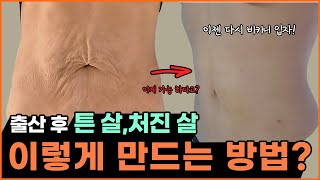 7:56 From removing postpartum stretch marks to firming a sagging belly when exercise isn't enough (Korean) Dr. Park's channel · 2025.02.19
-
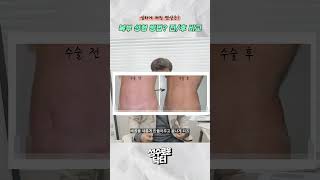 0:35 When exercise won't fix a sagging belly (Korean) Dr. Park's channel · 2025.02.20
-
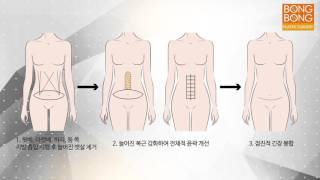 2:07 Abdominoplasty at BongBong Plastic Surgery (Korean) BongBong official · 2015.11.27
Frequently asked questions (FAQ)
Will tensing my abs all the time give me abs?
Tensing alone does not create defined abs. Developing abdominal muscles requires appropriate resistance exercise, and body fat also affects whether abs are visible.
My belly pulls in when I tense it — why does it come back out when I relax?
Because the contracting abdominal muscles change the shape of the abdominal wall temporarily. Fat and loose skin have not been removed, so when you relax, your abdomen returns to its original shape.
If my lower belly still sags despite hard exercise, is abdominoplasty effective?
Yes. Especially when loose skin and subcutaneous fat remain together after weight loss, abdominoplasty can make a big difference. Liposuction tidies fat and excision of stretched tissue improves the abdominal line.
Are abdominoplasty and liposuction the same surgery?
No. Liposuction mainly removes subcutaneous fat, while abdominoplasty removes loose skin and subcutaneous fat and, if needed, also corrects the abdominal wall. The two can be performed together.
Will losing more weight get rid of a loose belly?
If there is a lot of fat, losing weight can reduce the size of the abdomen, but skin that has already lost elasticity and stretched does not disappear completely with further weight loss. For skin sagging left after rapid weight loss in particular, direct excision with abdominoplasty can be considered.
Is abdominoplasty surgery to lose belly fat?
Abdominoplasty is not surgery aimed at weight loss. It is body-contouring surgery that tidies abdominal subcutaneous fat and loose skin and improves the abdominal contour, so maintaining an appropriate weight before and after surgery is important.
📖 References
Click a [number] in the text to jump to its source, and ↩ to return. Only papers whose title, journal and year were verified on PubMed are listed.
- ↩ Brobakken MF, Krogsaeter I, Helgerud J, Wang E, Hoff J. Abdominal aerobic endurance exercise reveals spot reduction exists: A randomized controlled trial. Physiol Rep. 2023;11(22):e15853.PMID 38010201 · DOI— randomized study of 16 overweight men over 10 weeks — 3% more trunk fat loss with added abdominal exercise
- ↩ Xia Y, Zhao J, Cao DS. Safety of Lipoabdominoplasty Versus Abdominoplasty: A Systematic Review and Meta-analysis. Aesthetic Plast Surg. 2019;43(1):167-174.PMID 30511162 · DOI— abdominoplasty meta-analysis, 17 studies · 14,061 patients — seroma 4.1%, hematoma 0.8%, wound problems 5.6%
BongBong Plastic Surgery · Dr. Park Seong-Soo, Medical Director
Contact us for a consultation