As we age, changes occur not only in the skin but also in the function of the cells that make up our body and in the regenerative capacity of tissue. So interest is growing in approaches that manage the regenerative environment of cells and tissue, going beyond anti-aging that simply removes wrinkles or tightens skin. One of the methods introduced at our wellness clinic is "BASICELL" treatment. BASICELL aims to support the body's recovery and regeneration based on the properties of undifferentiated cells capable of self-renewal and differentiation. However, cell-based regenerative therapy is still an area under research for various diseases and for aging, so rather than seeing BASICELL as a treatment that improves every aging problem, it is more accurate to understand it as a process of assessing your current condition and choosing the cell-based treatment you need.
Contents
- What is BASICELL?
- Why does cell regeneration matter for anti-aging?
- How is BASICELL treatment carried out?
- Why check telomeres first?
- Which cell sources does BASICELL include?
- What anti-aging goals does BASICELL treatment aim for?
- How many BASICELL sessions are needed?
- Is same-day treatment possible with a blood-based kit?
- What should I check before BASICELL treatment?
- BASICELL treatment: common myths and facts
What is BASICELL?
To understand the name BASICELL, you first need to understand the regenerative capacity of cells. Our body contains cells that are already differentiated to perform specific functions, as well as cells that have not yet fully differentiated and can proliferate on their own and differentiate into other cell types. Self-renewal and differentiation are also the hallmark features of stem cells.
The concept of BASICELL can likewise be explained around the properties of primitive cells with self-renewal and multipotency. Because of these properties, cell therapy and regenerative medicine have studied the potential for repairing damaged tissue and improving function. However, not all cells have the same capabilities; their properties and clinical potential differ depending on cell type and origin, culture and processing methods, and route of administration.
So with BASICELL treatment, rather than thinking "putting in good cells makes the body younger," it is important to check which cells are used, in what way, and for what purpose.
A review of stem cell clinical trials targeting aging reported early positive results in facial skin aging and frailty, but concluded that most were early-stage studies and further verification is needed.[1]
Why does cell regeneration matter for anti-aging?
As we age, the ability to maintain and repair tissue also changes. Reduced cell proliferation and regenerative capacity, and slower recovery from damage, are among the important changes in the aging process. Regenerative medicine in particular focuses on stem-cell-related self-renewal, tissue repair and cell-to-cell signaling. Research is also accumulating that the function of some stem and progenitor cells may change with age. That is why, in anti-aging too, how to manage the body's recovery and regenerative environment — beyond improving appearance — has become an important interest.
However, there is a distinction to make. The biological fact that cells have regenerative capacity is not the same as the clinical claim that a particular cell therapy reverses whole-body aging or regenerates organs. Anti-aging cell therapy is still an area of ongoing clinical trials and research.
How is BASICELL treatment carried out?
When considering BASICELL treatment, it is important to assess your current condition and then judge whether treatment is needed, rather than starting treatment right away. BASICELL treatment can be described as first checking basic health-related markers such as telomeres, and then, if your physical condition is judged to be reduced, carrying out 3–4 sessions of cell-based treatment. After treatment, the same markers can be rechecked to compare before-and-after changes.
However, an improved test value alone does not prove that "cells have regenerated" or "aging has been reversed." Changes in test values and changes in actual health status must be evaluated separately.
Why check telomeres first?
Telomeres are structures that protect the ends of chromosomes and are treated as an important marker in research on cell division and cellular aging. For this reason, studies have recently continued to use telomere length to obtain information related to biological aging. A retrospective study published in 2026 used blood telomere length as a marker for comparing before and after cell-based treatment, and observed changes in telomere length after treatment.
Which cell sources does BASICELL include?
The program described here explains that BASICELL includes the following three cell sources.
Autologous fat-derived BASICELL uses cells derived from your own adipose tissue.
Autologous blood-derived BASICELL uses your own blood as its basis.
Donor fat-derived BASICELL uses cells derived from a donor's adipose tissue.
When cell sources differ like this, their biological properties, preparation process and safety-management standards may not be the same. In particular, when cells or tissue derived from another person are used, the source and processing of the cells, lawful-use standards, infection control and safety verification are important.
What anti-aging goals does BASICELL treatment aim for?
Four directions are commonly mentioned when BASICELL treatment is approached for anti-aging.
Cell regeneration and tissue repair
BASICELL aims to support the restoration of damaged cells and tissue, with the goal of slowing the body's aging process and helping maintain healthy tissue.
Skin elasticity and wrinkle improvement
BASICELL aims to promote collagen and elastin production in the skin, with the goal of strengthening skin elasticity and softening wrinkles for firmer, more vibrant-looking skin.
Immune function and inflammatory response
BASICELL aims to help support the body's immune system by activating immune cells, with the goal of protecting the body and improving overall health.
Potential for repairing damaged tissue
Because the cells involved have the capacity to differentiate, BASICELL aims to help repair and regenerate damaged areas and to support the recovery of bodily function reduced by age. These are treatment goals; the extent of benefit in people is still being studied.
In a study injecting autologous adipose-derived stem cells into photoaged skin, biopsies showed new formation of elastic fiber structure in the dermis. However, it was a small study, and the level of evidence is not yet high.[2]
How many BASICELL sessions are needed?
The BASICELL program described here is based on 3–4 treatment sessions, with changes in markers checked before and after. What matters is not the number of sessions itself but the purpose of each session: the first stage assesses your current state, ongoing sessions track your physical condition and related markers, and at the end the before-and-after values are compared to check for change.
Related readingThe treatment cycle for stem cell skin boosters is covered in "Stem cell skin boosters: how many sessions until you see results?" (Korean).
Is same-day treatment possible with a blood-based kit?
Recently, a blood-based BASICELL kit has been introduced to shorten preparation time and allow same-day treatment. In general, the preparation process for cell therapy differs greatly depending on how cells are collected, separated, processed and administered. So the fact that "a blood-based kit is used" does not mean every kind of cell therapy can be done the same day. If you are planning treatment, it is important to have the medical team explain what tests are done that day, what material is obtained, and what process it goes through before administration.
What should I check before BASICELL treatment?
Rather than deciding on treatment just because it is called "anti-aging," you should check the following carefully. First, check which cells are actually used in BASICELL. Second, check which tests are used to assess your condition before treatment — it is good to know which health markers are checked besides telomeres. Third, check what criteria are used to judge the effect after treatment: whether it only shows a change in a single test value, or also evaluates changes in your actual physical condition and symptoms.
BASICELL treatment: common myths and facts
| What many people think… | What the evidence shows |
|---|---|
| "Stem cell treatment reverses aging." | Research on improving skin aging is ongoing, and the range and duration of effects are still being studied. |
| "One treatment lasts indefinitely." | The number and interval of sessions are set according to your condition. |
| "All cell treatments are the same." | They differ in nature depending on cell source, processing and injection method. |
When patients ask about cell-based treatment, I first ask "what are you hoping for?" Setting measurable goals such as skin texture and elasticity is what allows an honest before-and-after comparison.
As we age, changes occur not only in the skin but also in the function of the cells that make up our body and in the regenerative capacity of tissue. So interest is growing in approaches that manage the regenerative environment of cells and tissue, going beyond anti-aging that simply removes wrinkles or tightens skin. One of the methods introduced at our wellness clinic is "BASICELL" treatment.
🔬 Supporting research
Peer-reviewed international journal articles that support this article. Click a title to open the PubMed abstract.
- Frontiers in aging 2023 — review of stem cell clinical trials targeting aging Recent clinical trials with stem cells to slow or reverse normal aging processes. Key finding: early positive results in skin aging and frailty; more research needed In text [1] · PMID 37090485 · DOI
- Plastic and reconstructive surgery 2020 — autologous adipose stem cell injection in photoaged skin Photoaged Skin Therapy with Adipose-Derived Stem Cells. Key finding: regeneration of elastic fiber structure observed In text [2] · PMID 32459770 · DOI
🎬 Watch — Dr. Park Seong-Soo · BongBong Plastic Surgery
Related videos from BongBong Plastic Surgery's official channel and Dr. Park Seong-Soo's channel. Videos are in Korean and play on YouTube.
-
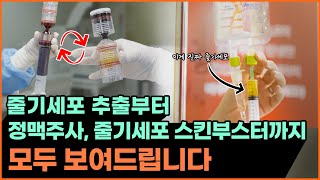 7:46 Stem cell injection before and after: extraction, IV infusion and skin booster all revealed (Korean) Dr. Park's channel · 2025.04.16
-
 3:34 Stem cells for anti-aging: so what are they good for? (Korean) Dr. Park's channel · 2024.09.19
-
 4:16 From skin boosters to the hairline: powerful regeneration, a VIP favorite (stem cells) (Korean) BongBong official · 2022.10.04
Frequently asked questions (FAQ)
What is BASICELL?
A. BASICELL is the name of a cell-based treatment used at our clinic, explained based on the properties of undifferentiated cells capable of self-renewal and differentiation. The exact type and source of the cells should be confirmed through the treatment program.
What are the effects of BASICELL treatment?
A. Its goals include cell regeneration and tissue repair, better skin elasticity and wrinkle improvement, immune support, and repair of damaged tissue. Evidence in people is still at an early stage, so outcomes vary by individual.
How many BASICELL sessions are needed?
A. The program described here is based on 3–4 sessions, with before-and-after changes checked.
Which cells go into BASICELL?
A. The program described includes autologous fat-derived, autologous blood-derived and donor fat-derived cells. The actual type and composition of cells used should be confirmed with the medical team before treatment.
Is same-day treatment possible?
A. With the blood-based kit, this program can be run to allow same-day treatment. However, whether it can actually be done the same day and how depends on the type of cells used and the processing method.
📖 References
Click a [number] in the text to jump to its source, and ↩ to return. Only papers whose title, journal and year were verified on PubMed are listed.
- ↩ Garay RP. Recent clinical trials with stem cells to slow or reverse normal aging processes. Front Aging. 2023;4:1148926.PMID 37090485 · DOI— review of stem cell clinical trials targeting aging — early positive results in skin aging and frailty; more research needed
- ↩ Charles-de-Sá L, Gontijo-de-Amorim NF, Rigotti G, et al. Photoaged Skin Therapy with Adipose-Derived Stem Cells. Plast Reconstr Surg. 2020;145(6):1037e-1049e.PMID 32459770 · DOI— autologous adipose stem cell injection in photoaged skin — regeneration of elastic fiber structure observed
BongBong Plastic Surgery · Dr. Park Seong-Soo, Medical Director
Contact us for a consultation